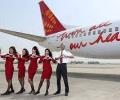
Capa lauded govt's efforts in rescuing SpiceJet.

In a meeting with stakeholders last week, the authority mooted setting up a Special Purpose Vehicle along with airlines and state-owned oil marketing companies to develop common infrastructure to import ATF, among others, at Chennai and Kolkata airports. While AAI and OMCs will hold 76 per cent in the proposed SPV, the airlines will participate in the remaining 24 per cent equity.

Jet Airways on followed its smaller rival SpiceJet and hiked fares by a steep 25 per cent to mitigate the impact of the sharp fall in the rupee value and a near 15 per cent spike in oil prices of late.

Pakistan was ready to buy petroleum products from India if these were offered at "right prices", the country's minister of Petroleum and Natural Resources Asim Hussain said.

No frills airlines SpiceJet and IndiGo have merged fuel surcharge with the base fares, saying it would simplify the prevailing fare structure.

If that happens, Jet Airways will be the first bankrupt airline which will be revived under the Insolvency process.
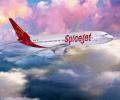
Indian budget airline SpiceJet has agreed to buy around 40 Boeing 737 passenger jets worth over $4 billion at list prices as it seeks to modernize its fleet and climb out of the red, industry sources said on Tuesday.
Recent attempts to salvage the situation might not be enough thanks to the rise in jet fuel prices and depreciation of the rupee.
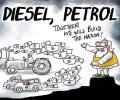
The government on Wednesday scrapped a week-old tax on the export of petrol and cut windfall taxes on overseas shipment of diesel and ATF as well as the one imposed on domestically produced crude oil after global oil prices fell. While the Rs 6 a litre export duty on petrol was scrapped, the tax on the export of diesel and jet fuel (ATF) was cut by Rs 2 per litre each to Rs 11 and Rs 4 respectively, government notifications showed. The tax on domestically produced crude was also cut to Rs 17,000 per tonne from Rs 23,250, a move that will benefit producers like ONGC and Vedanta Ltd.
With declining jet fuel prices, Air India has once again taken the lead in introducing further cuts in its fares on key domestic routes, which may lead to another round of 'fare war' among domestic carriers, including the no-frill ones.
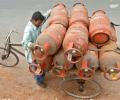
Since international oil prices have fallen, the government's subsidy payout will fall by almost Rs 50 per cylinder to Rs 240.
The GST Council on Saturday postponed a decision on cutting tax rate on life and health insurance premiums, officials said. The 55th meeting of the GST Council, chaired by Union Finance Minister Nirmala Sitharaman and comprising state counterparts, decided that some more technicalities needed to be ironed out and tasked the GoM for further deliberations.
The price of non-subsidised LPG, which customers buy after using up their quota of 12 subsidised cylinders, was raised by Rs 16.50 per 14.2-kg cylinder, the first hike in six months.
Whole price index inflation will touch zero per cent by March end 2009, on the back of 2 per cent excise duty cut, a 7 per cent cut in ATF prices and a strong base effect," Azis Bank said in a note. The report further said that a revival in demand is unlikely to be so strong and inflation might be negative in April 2009.
Cracks started appearing on Saturday in a grouping of airlines that was planning to suspend flights on August 18 to protest high jet fuel prices and taxes, with budget carrier IndiGo saying it would operate as usual.
In a major relief to cash-strapped airlines, jet fuel (ATF) prices were today reduced by a massive 5 per cent, the steepest reduction in rates since February 2010.
The hike comes on back of over 12 per cent hike on June 15. ATF price on that day were raised by Rs 3,949 to Rs 36,252 per kilolitre in Delhi.
Singapore Airlines General Manager in India C W Foo said India was one of the top five markets across the world for the carrier and it would not allow short term fluctuations to affect its long term strategies in India. Foo said the carrier was looking at increasing its frequencies from Bangalore, New Delhi and Chennai as these routes have dense traffic.
Indian carriers, which are still reeling under high jet fuel prices, are now seeing red over airports increasing the space rental fees by 50 to 450 per cent. Airport charges account for 12-15 per cent of an airline's costs.

'Boeing has returned some cash to the airline which will help it improve the current liquidity crisis.'
Replying to questions on losses to Air India, civil aviation minister Praful Patel said the rally in international crude oil prices that touched $147 a barrel in July 2008, hit Indian carriers by Rs 10,000 crore (Rs 100 billion) in jet fuel bill. Air India loses are a result of high jet fuel prices and fall in air traffic following global economic slowdown, he said. "There are (also) systematic issues which need to be corrected."
As a measure to increase productivity and reduce costs amid rising jet fuel prices, low cost airline GoAir has reduced the number of flights to various sectors.
The worldwide softness in the sector has ensured there are few takers for these aircraft; those who had leased the aircraft to Indian carriers will invoke a hefty penalty if the machines are sent back to them.
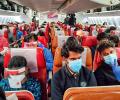
Domestic air passenger traffic plunged around 43 per cent month-on-month at 64 lakh in January 2022 as the third wave of the pandemic and the resultant restrictions by state governments kept flyers away from air travel, Icra said on Tuesday. The domestic passenger volume in December 2021 was recorded at 112 lakh. The rating agency said it is expecting the recovery process to remain subdued during March quarter and that the jet fuel prices continue to be a drag on the sector. The passenger traffic declined 17 per cent last month over 77 lakh passengers transported by domestic airlines on local routes in January 2021, Icra said.
No immediate comment was available from airlines on the impact of the price hike on passenger fares.

The government on Tuesday increased the windfall profit tax on crude oil produced in the country and reduced the levy on exports of diesel. The tax, levied in the form of Special Additional Excise Duty or SAED, on domestically produced crude oil was increased to Rs 9,800 per tonne from Rs 9,050 a tonne, according to an official notification. SAED on the export of diesel was reduced to Rs 2 per litre from Rs 4 a litre and on jet fuel or ATF to nil from Rs 1, the notification said.

This is the third consecutive profitable quarter for SpiceJet.

Amid record-high fuel prices, Finance Minister Nirmala Sitharaman on Monday said there is no proposal as of now to bring crude oil, petrol, diesel, jet fuel (ATF) and natural gas under the Goods and Services Tax (GST). When the GST was introduced on July 1, 2017, amalgamating over a dozen central and state levies, five commodities - crude oil, natural gas, petrol, diesel, and aviation turbine fuel (ATF) - were kept out of its purview given the revenue dependence of the central and state governments on this sector. This meant that the central government continued to levy excise duty on them while state governments charged VAT. These taxes, with excise duty, in particular, have been raised periodically.
Private carrier Jet Airways is expected to further consolidate its international operations into a major revenue grosser in FY09, to overcome the growing turbulence in the domestic sector. The general economic scenario does not bode well for capacity expansion on domestic routes, with some of these struggling on account of overcapacity, and only yesterday some airlines were pushed to hike fares to make up for higher aviation turbine fuel prices.
This is three and a half times the loss in the same quarter a year ago.
Jet Airways -- which has been flying for 25 years - on Friday described reports that the airline cannot fly beyond 60 days as "incorrect and malicious" as well as denied any talks of stake sale.

The Union Cabinet is likely to take up the airline industry's concerns over high taxes on jet fuel and airport charges at its next meeting and a Group of Ministers (GoM) may be set up to focus on ATF pricing.

Passengers can book the combined plane-train journey as a single ticket.

The GST rate is 5 per cent and 12 per cent on economy and business class tickets, respectively

Consumption-related stocks, such as hotels, and quick service restaurants (QSRs), have been hitting the ball out of the park ahead. On the other hand, the Miss World Pageant scheduled for later this year in New Delhi, too, could provide some tailwind to these stocks, especially hotels and aviation. However, analysts suggest investors put their best foot forward and buy these counters only on a decline given the recent rally and economic headwinds.

Jet fuel constitutes roughly 40 per cent of the operating cost of an airline.

Airlines will report losses in FY16 but 35% less Y-o-Y
The government has cut the windfall profit tax on crude oil produced in the country while the levy on exports of diesel and ATF has been hiked, an official notification said. The tax, levied in the form of special additional excise duty or SAED, on domestically produced crude oil was reduced to Rs 6,700 per tonne from Rs 7,100 a tonne. SAED on the export of diesel was increased to Rs 6 per litre from Rs 5.50 a litre and on jet fuel or ATF to Rs 4 per litre from Rs 2, the notification said.
Lessor market sources said with the fuel prices remaining high, IndiGo would get better rates for the fuel-efficient A320neos.
